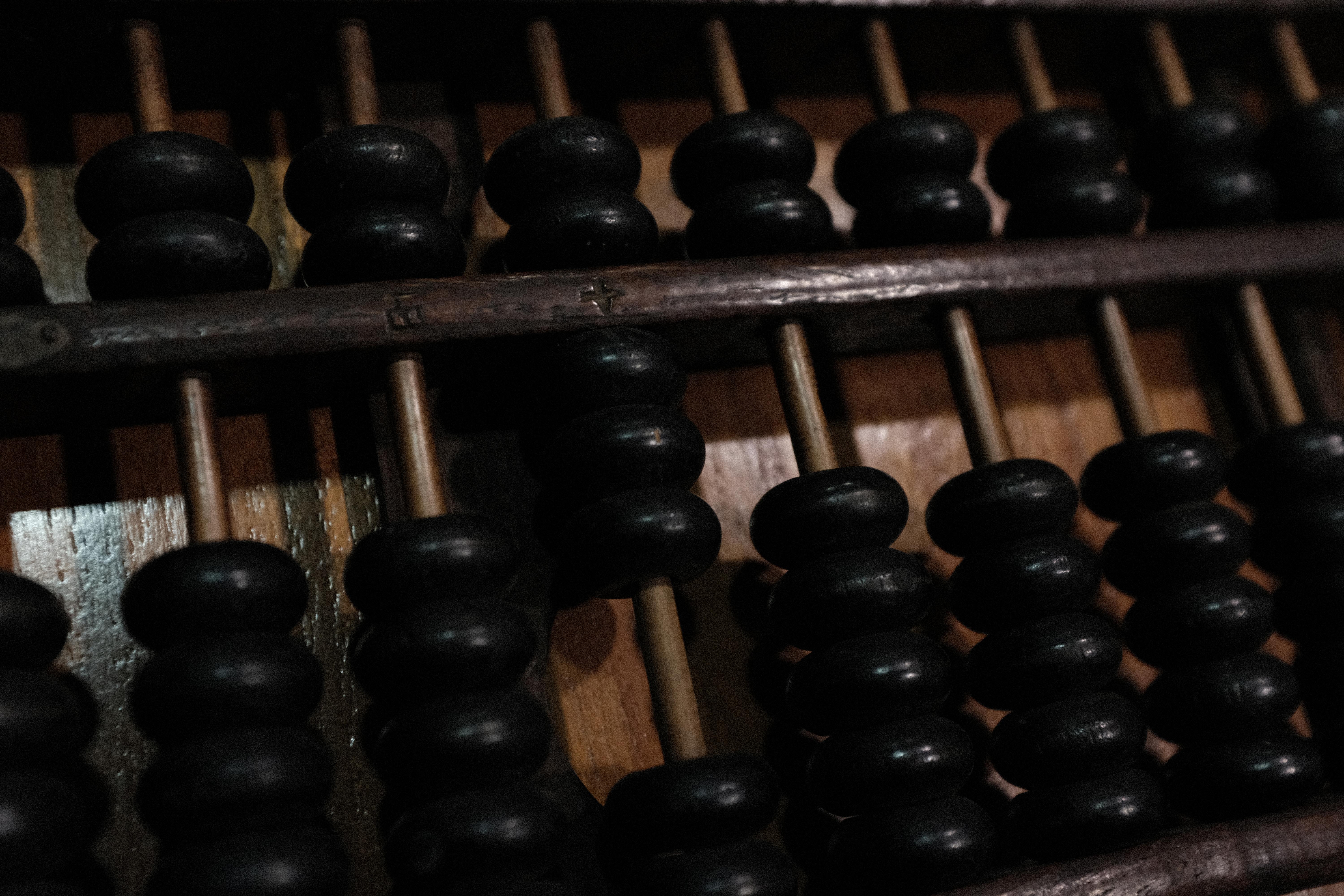
Wherever there was trade, there was trust to be verified. Wherever trust had to be verified, records had to be kept. The story of accounting is the story of civilisation itself: the quiet infrastructure behind every functioning business, empire, and economy. From Mesopotamian tokens to financial statements audited under Sarbanes-Oxley, this is how we got here. And more importantly, this is why it still matters for the three million small businesses in Thailand and the hundreds of millions more across Emerging Markets that have yet to benefit from what accounting was always meant to provide: clarity.
Origins: When Clay Meant Credit
The first accountants were not dressed in suits. They were farmers and temple administrators in ancient Mesopotamia, pressing small geometric clay tokens into envelopes around 7,500 BC to track grain, livestock, and tax obligations. These tokens, discovered across archaeological sites from Syria to Afghanistan, represent the oldest known accounting system in human history, predating written language by several thousand years.1
Around 3,300 BC, a decisive simplification occurred. Rather than sealing tokens inside clay envelopes, recordkeepers began pressing the tokens into flat clay surfaces, leaving impressions that could be read without breaking the seal. This was the birth of the tablet: one of the world’s first written records, emerging not from literature, but from the need to account for who owed what, to whom, and when.2
Thousands of years before the word “debit” existed, the infrastructure of commerce was already being built on a single principle: if you cannot record it, you cannot trust it.
If you cannot record it, you cannot trust it.
Egypt, Babylon, and the Birth of the Auditor
The Egyptians developed early auditing systems. Their auditors were not number-crunchers. They were listeners. The Latin root audire means “to hear,” because early audits were oral: storehouse entries and exits were recited and reconciled aloud before witnesses.
The Phoenicians, trading heavily across the Mediterranean with Egyptian and Mesopotamian partners, developed one of the world’s first phonetic alphabets. The motivation was not literary. It was commercial. They needed a faster, more reliable way to record transactions so they would not get cheated in trade. From commerce came the codification of communication. From the need to account came the tools to write.
Luca Pacioli: The Monk Who Systematised Money
In 1494, an Italian Franciscan friar and mathematician named Luca Pacioli published Summa de Arithmetica, Geometria, Proportioni et Proportionalita. Within its 615 pages, Pacioli documented the Venetian method of double-entry bookkeeping: a system in which every debit must have a corresponding credit.3
Pacioli kept unusual company. For three years in Milan, he shared a house with Leonardo da Vinci. He treated bookkeeping as a branch of mathematics and not of commerce, which is perhaps why he bothered to write it down.19
Merchants in Venice, Genoa, and Florence had been using variations of double-entry for at least a century. But it was Pacioli who codified this system with mathematical precision and published it in a form that could be studied, replicated, and scaled. His simple insight gave us balance. His journals, ledgers, and trial balances became the global template.
Benedetto Cotrugli had put the same method in writing thirty-six years earlier, in his manuscript Della Mercatura et del Mercante Perfetto of 1458. Surviving ledgers from fourteenth-century Genoa show the practice already mature. What the Summa gave the world was not the invention. It was the printing press. Paganini’s workshop in Venice turned a Venetian trade secret into finance’s first mass-produced textbook.20
Without Pacioli, there is no balance sheet. There is no income statement. There is no structured way to distinguish what a business owns from what it owes. More than five centuries later, his framework remains the foundation of every financial system on earth. Every debit still requires a credit. Balance is not optional. It is the condition for clarity.
Without Pacioli, there is no balance sheet. There is no income statement.
Three centuries after Pacioli’s printer set the type, Goethe called double-entry bookkeeping “one of the finest inventions of the human mind” in Wilhelm Meister’s Apprenticeship.21
Revolutions, Railroads, and Regulation
Werner Sombart, writing in 1902, and Max Weber three years later, argued that modern capitalism was unthinkable without double-entry. The claim is contested in its details and durable in its direction. The joint-stock company, the investor’s prospectus, and the auditor’s opinion all depend on a ledger that balances itself. The innovation was not arithmetic. It was the discipline of showing your work in two columns at once.22
The Industrial Revolution transformed accounting from a merchant’s tool into a corporate necessity. As businesses scaled, railroads spanned continents, and capital moved faster than people, merchants needed more than ledgers. They needed financial statements. Cash flow projections. Depreciation schedules. The complexity of industrial enterprise demanded a profession.
In 1854, the Institute of Chartered Accountants of Scotland (ICAS) secured a Royal Charter from Queen Victoria, creating the world’s first professional body of chartered accountants and establishing the title “CA” as a protected credential.4 The profession had arrived.
By 1887, the American Association of Public Accountants was founded, and with the growth of public capital markets, the demand for standardised, auditable financial reporting accelerated. In 1934, the United States Securities and Exchange Commission (SEC) was established, giving the federal government direct oversight of accounting standards for publicly listed companies.
What had begun as tallies on clay was now a regulated, global profession. Accountants were no longer just record keepers. They were gatekeepers to capital.
The American Standard, and Then the World
The twentieth century brought convergence. The United States developed Generally Accepted Accounting Principles (GAAP), while the rest of the world moved toward International Financial Reporting Standards (IFRS), first issued in their modern form in 2001.
Today, 169 jurisdictions have been profiled by the IFRS Foundation for their use of IFRS Accounting Standards.5 The ambition is a single global language for financial reporting: comparability across borders, transparency for investors, clarity for the entrepreneurs who need capital.
For SMEs, the IFRS Foundation published the third edition of the IFRS for SMEs Accounting Standard in 2025, a simplified framework designed for entities that are not publicly accountable.8 In ASEAN, Thailand’s financial reporting standards (TFRS) are formulated based on IFRS, and Thailand has been progressively aligning its standards with international practice.6
And yet, the gap between what the standards demand and what millions of private businesses actually deliver remains vast.
Enron, Ethics, and the Cost of Bad Books
The twenty-first century opened with hard lessons.
Enron Corporation, once ranked sixth on the Fortune Global 500 with revenues of USD 100.7 billion in 2000, collapsed into bankruptcy on 2 December 2001 with USD 63.4 billion in assets, marking the largest corporate bankruptcy in American history at that time. Its stock price fell from a peak of USD 90 per share to under USD 1. Shareholders filed a USD 40 billion lawsuit and recovered just USD 7.2 billion, the largest securities litigation settlement in U.S. history.9 Employees who had invested retirement savings in Enron stock saw their accounts wiped out. Arthur Andersen, one of the world’s five largest auditing firms, was dissolved.7
The response was the Sarbanes-Oxley Act of 2002, which created the Public Company Accounting Oversight Board (PCAOB), mandated CEO and CFO certification of financial statements, prohibited auditors from providing certain non-audit services to their clients, and introduced criminal penalties of up to 20 years for knowingly falsifying financial records.10
But the lesson did not hold everywhere. In June 2020, Germany’s Wirecard AG admitted that EUR 1.9 billion on its balance sheet, roughly a quarter of its total assets, likely never existed. Its CEO was arrested. Its auditor, EY, had signed off on the accounts for years.1112
Accounting is now a frontline defence. The line between financial engineering and fraud is thin. The cost of bad books is no longer just a restatement. It is bankruptcy, criminal prosecution, and the destruction of trust that took decades to build.
The line between financial engineering and fraud is thin.
Today: Global Standards, Local Realities
With businesses operating across borders, accounting has gone global. IFRS and GAAP dominate the playbook. Regulators want comparability. Investors require clarity. Entrepreneurs need systems that scale.
But the challenge of our time is not at the top of the market. It is at the base.
Globally, MSMEs account for 90% of all businesses, more than 70% of employment, and 50% of GDP.13 In ASEAN, MSMEs represent 99.8% of all enterprises, 67.6% of the workforce, and 38.7% of national economic output, according to the most recent data from 26 ADB member countries.14 In Thailand alone, SMEs number over 3.2 million businesses, or 90% of all domestic firms, contributing roughly 35% of the country’s GDP.17
Yet the global MSME finance gap now stands at USD 5.7 trillion. When informal enterprises are included, the figure swells to USD 8 trillion.15 In Indonesia, 93.5% of small enterprises use their own money to finance operations, with only 6.7% reporting access to a bank loan.16 In the Philippines, mandatory IFRS-based sustainability reporting for publicly listed companies will not begin until 2027, and for large non-listed companies, not until 2029.18
The standards exist. The talent exists. The capital exists. What is missing is the infrastructure to make accounting accessible, legible, and actionable for the businesses that need it most.
Why This Matters: Infrastructure for Capital Citizenship
Pacioli’s logic does not stop at the firm. National income accounting, the system that gives us GDP, extends double-entry to a whole economy: every flow recorded twice, as spending and as income, the books required to balance. What the books do not see, they do not price. GDP does not record the depletion of a forest, the warming of an ocean, or the unpriced labour of a carer at home. The ledger that balanced itself in a Venetian counting-house now balances the world, and the lines it leaves blank are among the defining facts of our century.23
Five thousand years of accounting history point to one conclusion: the record is the foundation of everything.
You cannot allocate capital well if you do not first know where your capital went. You cannot earn credit if you cannot show a creditor a clean ledger. You cannot distribute dividends to shareholders if you have not first served your clients, paid your employees, honoured your suppliers, reinvested in the business, and met your obligations to creditors. The ledger is not paperwork. It is the map of every decision a business has ever made.
At KRV & Co., we treat accounting as infrastructure. A ledger is not a compliance exercise. It is the foundation upon which every capital allocation decision is built. And this is why we exist: to give SMEs the financial clarity they need to scale their businesses, and to give capital providers the insights they need to support promising private businesses.
Accounting is not history. It is how history is written.
You cannot allocate capital well if you do not first know where your capital went.
Footnotes
- Schmandt-Besserat, D. (2015). “From Accounting to Writing.” University of Texas at Austin. sites.utexas.edu
- Biblical Archaeology Society (2014). “World’s Oldest Accounting System Withstood Invention of Writing.” biblicalarchaeology.org
- Mathematical Association of America. “Mathematical Treasure: Luca Pacioli’s Summa.” maa.org
- ICAS (1854; 2024). “ICAS Charter.” icas.com
- IFRS Foundation (2026). “Who Uses IFRS Accounting Standards?” ifrs.org
- Thai Accounting Professional Council (2024). Via BizWings Thailand. bizwings.co
- ScienceDirect (2002). “Enron: What Happened and What We Can Learn From It.” sciencedirect.com
- IFRS Foundation (2025). “IFRS for SMEs Accounting Standard, Third Edition.” ifrs.org
- Stanford Law School (2008). “Enron Settlement: USD 7.2 Billion to Shareholders.” law.stanford.edu
- Harvard Law School Forum on Corporate Governance (2022). “The Important Legacy of the Sarbanes-Oxley Act.” corpgov.law.harvard.edu
- BBC News (2020). “Wirecard: Scandal-hit Firm Says Missing EUR 1.9bn May Not Exist.” bbc.com
- Reuters (2020). “Phantom Billions Plunge Wirecard into Chaos.” reuters.com
- United Nations (2024). “Global Micro-, Small and Medium-Sized Enterprises Report.” un.org
- ADB (2025). “Asia Small and Medium-Sized Enterprise Monitor 2025.” seads.adb.org
- IFC (2025). “MSME Finance.” ifc.org
- IFC MSME Finance Gap Report (2025). smefinanceforum.org
- Lundgreen’s Investor Insights (2026). “Thailand Throws a Lifeline to SMEs.” lundgreensinvestorinsights.com
- Philippine SEC (2026). “Philippines Launches Mandatory IFRS-Based Sustainability Reporting Standards.” Via ESG Today. esgtoday.com
- Gleeson-White, J. (2012). Double Entry: How the Merchants of Venice Created Modern Finance. W. W. Norton. wwnorton.com
- Gleeson-White, J. (2012). Double Entry: How the Merchants of Venice Created Modern Finance. W. W. Norton. wwnorton.com
- Goethe, J. W. von (1796). Wilhelm Meister’s Apprenticeship, Book I, Chapter X. Carlyle translation (1824). gutenberg.org
- Gleeson-White, J. (2012). Double Entry. W. W. Norton, synthesising Sombart (1902) and Weber (1905). wwnorton.com
- Gleeson-White, J. (2014). Six Capitals. W. W. Norton. wwnorton.com
- Schmandt-Besserat, D. (2015). “From Accounting to Writing.” University of Texas at Austin. sites.utexas.edu
- Biblical Archaeology Society (2014). “World’s Oldest Accounting System Withstood Invention of Writing.” biblicalarchaeology.org
- Mathematical Association of America. “Mathematical Treasure: Luca Pacioli’s Summa.” maa.org
- ICAS (1854; 2024). “ICAS Charter.” icas.com
- IFRS Foundation (2026). “Who Uses IFRS Accounting Standards?” ifrs.org
- Thai Accounting Professional Council (2024). Via BizWings Thailand. bizwings.co
- ScienceDirect (2002). “Enron: What Happened and What We Can Learn From It.” sciencedirect.com
- IFRS Foundation (2025). “IFRS for SMEs Accounting Standard, Third Edition.” ifrs.org
- Stanford Law School (2008). “Enron Settlement: USD 7.2 Billion to Shareholders.” law.stanford.edu
- Harvard Law School Forum on Corporate Governance (2022). “The Important Legacy of the Sarbanes-Oxley Act.” corpgov.law.harvard.edu
- BBC News (2020). “Wirecard: Scandal-hit Firm Says Missing EUR 1.9bn May Not Exist.” bbc.com
- Reuters (2020). “Phantom Billions Plunge Wirecard into Chaos.” reuters.com
- United Nations (2024). “Global Micro-, Small and Medium-Sized Enterprises Report.” un.org
- ADB (2025). “Asia Small and Medium-Sized Enterprise Monitor 2025.” seads.adb.org
- IFC (2025). “MSME Finance.” ifc.org
- IFC MSME Finance Gap Report (2025). smefinanceforum.org
- Lundgreen’s Investor Insights (2026). “Thailand Throws a Lifeline to SMEs.” lundgreensinvestorinsights.com
- Philippine SEC (2026). “Philippines Launches Mandatory IFRS-Based Sustainability Reporting Standards.” Via ESG Today. esgtoday.com
- Gleeson-White, J. (2012). Double Entry: How the Merchants of Venice Created Modern Finance. W. W. Norton. wwnorton.com
- Gleeson-White, J. (2012). Double Entry: How the Merchants of Venice Created Modern Finance. W. W. Norton. wwnorton.com
- Goethe, J. W. von (1796). Wilhelm Meister’s Apprenticeship, Book I, Chapter X. Carlyle translation (1824). gutenberg.org
- Gleeson-White, J. (2012). Double Entry. W. W. Norton, synthesising Sombart (1902) and Weber (1905). wwnorton.com
- Gleeson-White, J. (2014). Six Capitals. W. W. Norton. wwnorton.com